India’s Pathway to Calm, Conscious, and Transformational Leadership
In India’s rapidly evolving corporate world—shaped by global competition, digital acceleration, and rising employee expectations—leaders are under constant pressure. This often leads to emotional reactivity, impulsive decisions, and strained workplace relationships. The Empty Boat Mindset, rooted in ancient Eastern philosophy, helps leaders shift from reaction to conscious response. It brings clarity amid chaos, composure during conflict, and grounded judgment in moments that demand emotional intelligence.
The Zen Story Behind the Empty Boat Mindset
The Empty Boat principle comes from a Zen story where a fisherman’s boat, pushed by a storm, collides with another man’s property. While the owner rages, the fisherman remains calm, explaining that the storm was responsible and no one was at fault. His final words—“If the boat is empty, there is no one to blame”—reveal a profound truth. Conflicts escalate when we assume intention where none exists. When leaders approach situations assuming neutrality, emotional charge dissolves, enabling calm and clear behaviour.
Why Indian Leaders Need This Mindset Today
Indian workplaces are emotionally expressive, culturally layered, and hierarchically sensitive. These dynamics make misunderstandings common and reactions quick. Research shows a large portion of workplace stress in India stems from reactive leadership and misinterpreted intentions. The Empty Boat Mindset helps leaders filter out ego-driven assumptions and engage with situations objectively, reducing conflict and improving decision-making.
The Ego–Assumption Cycle: A Leadership Trap
Many leadership conflicts stem from assumptions about intention rather than actual behaviour. Leaders often assume disrespect, avoidance, or challenge when team members behave in unexpected ways. This ego–assumption cycle creates defensiveness, escalates conflict, and damages trust.
The Empty Boat Mindset breaks this cycle by encouraging leaders to assume neutrality first, allowing them to view issues with clarity and respond thoughtfully instead of emotionally.
Common Ego-Based Assumptions in Leadership
What the Empty Boat Mindset Encourages
The Calm Leader: A Strategic and Scientific Advantage
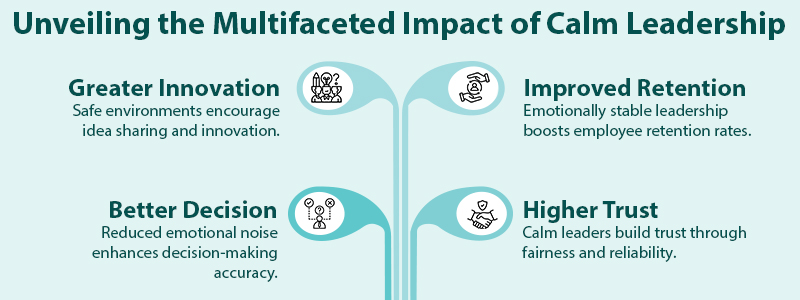
Calm leadership is an intentional discipline that enhances thinking, relationships, and organisational influence. Indian research shows that calm leaders make better decisions, earn higher trust, and create psychologically safe environments. A leader’s emotional tone becomes the team’s emotional climate. When leaders remain steady, teams feel safe to innovate, collaborate, and stay committed.
Applying the Empty Boat Mindset: Habits That Transform Leadership
Applying the mindset requires consistent daily practice. These habits help leaders develop emotional steadiness and clarity.
1. The Strategic Pause
A brief pause before responding helps leaders regulate emotions and avoid impulsive behaviour. Even five seconds of silence can shift a reaction into a thoughtful response.
2. Practising Mindfulness
Short daily mindfulness practices improve emotional regulation, reduce impulsive reactions, and enhance mental clarity. This strengthens neural pathways responsible for calm decision-making.
3. Reframing Situations
Instead of defaulting to “Why is this happening to me?”, leaders can ask, “What else could be influencing this behaviour?” This shifts the mindset from blame to understanding.
4. Responding Over Reacting
Responses are intentional and thoughtful; reactions are quick and emotional. Leaders who respond instead of react project maturity and stability.
5. Communicating with Empathy
Using language that reduces tension—such as “Help me understand…”—creates openness and collaboration instead of defensiveness.
The Neuroscience Behind Calm Leadership
Neuroscience studies show that calm leadership is rooted in brain function. The amygdala triggers emotional reactivity, while the prefrontal cortex supports logic and decision-making. Stress activates the amygdala, reducing a leader’s clarity and impulse control. Calm practices activate the prefrontal cortex, improving judgment and emotional stability. Over time, consistent calmness rewires the brain toward clarity, empathy, and better leadership behaviour.
Creating an Empty Boat Culture
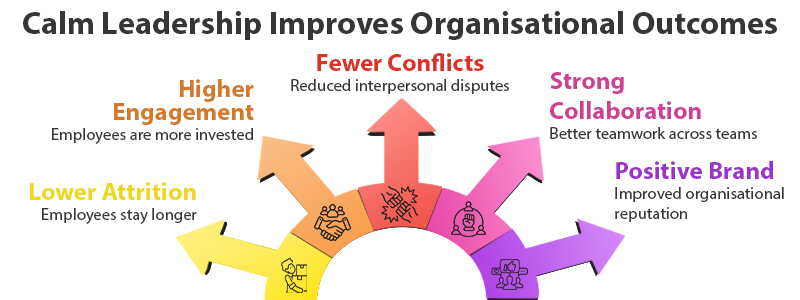
When leaders consistently practice the Empty Boat Mindset, the positive effects extend across the organisation. Teams become more collaborative, conflicts decrease, and engagement rises. This creates a workplace culture that values clarity, compassion, and emotional stability. Over time, calmness becomes part of the organisational identity—shaping leadership behaviour, team interactions, and overall performance.
Conclusion: Leading With Calm, Clarity, and Conscious Presence
In a fast-changing country like India—where teams are diverse, expectations are high, and environments shift rapidly—the Empty Boat Mindset offers a powerful path to grounded, conscious leadership. It teaches that calm is not the absence of pressure but the mastery of how we handle it. When leaders assume the boat is empty, they let go of ego, reduce conflict, and create space for clarity, connection, and collaboration. Calm leaders transform moments, shape cultures, and elevate people. In today’s corporate India, the Empty Boat Mindset is not just relevant—it is essential.
About the Author
Vijay B is a passionate mathematics educator and academic leader with over 13 years of experience in teaching and institutional development. Holding Master’s degrees in Engineering and Education, he seamlessly blends deep subject expertise with innovative, student-centred pedagogy.
A recipient of the Times Edu Ex Award and the Inspirational Guru Award (2024), Vijay is recognised for his commitment to nurturing curiosity, creativity, and inclusive learning environments. In his role as Head – Academic Development at Vels Group of Schools, Chennai, he leads initiatives that strengthen teaching practices and empower both educators and learners.
Beyond academics, he is an avid reader, traveller, mentor, poet, and the author of two books—Beyond My Vision and Inkscapes and Echoes—reflecting his belief that education thrives at the intersection of intellect and imagination.